Evaluating Public Schools

This section provides tools to aid in finding the best public school option for your child. Compare private and public schools, explore school zoning issues, and delve into the public school grading and ranking system. Find information on the safest schools and what they are doing right.

View the most popular articles in Evaluating Public Schools:

School Security in the Aftermath of Sandy Hook: What are Schools Doing to Protect Students?

Updated
|
School Security in the Aftermath of Sandy Hook: What are Schools Doing to Protect Students?
We explore some of the security measures currently in place at schools around the country, and how those measures might change in the aftermath of the horrific Sandy Hook tragedy.

In the wake of the Sandy Hook elementary school tragedy, parents spent the weekend holding their children a little tighter and telling them how much they loved them a little more often. Then Monday morning arrived, and it was time to send those children off to school once again. Only Monday was different – parents didn’t drop their children off with the same carefree spirit they had done just a few short days before. Now, there was fear and anxiety surrounding that seemingly simple, normal event, as parents wondered what their own schools were doing to keep children safer. Some parents purchased bulletproof vests for their children, others equipped little ones with bulletproof jackets. In the wake of Sandy Hook, schools too are working to find ways to improve safety and reassure parents that they can leave their children at school with some peace of mind.

This video describes the events of the Sandy Hook shooting.

Learning from Previous Events

While the Sandy Hook occurrence was one of the worst shootings at a public school to date, other similar tragic events have moved some schools to implement new security procedures already. Kentucky.com reports that in 1997, a 14-year-old student at Heath High School killed three classmates and wounded five others. The students had been gathered for a prayer meeting when the student began firing. One year after the event, the

. . .read more

10 Tips for Choosing the Best High School for Your Child

Updated
|
10 Tips for Choosing the Best High School for Your Child
In some cases, it might be the school down the street. Other times, it could be the school across town. We’ll talk about the factors to consider when choosing the best high school for your child.

High school is an important time of life that sets the stage for the rest of a child’s academic and professional future. Simply sending your son or daughter to the high school down the street may work in some instances, but definitely not in all. The key to choosing the best high school for your child lies first in understanding your child’s specific needs, but it also requires you to learn about the various options available. To help you in this seemingly daunting task, we have 10 tips to help you choose the best fit in high schools for your child.

This video from Great Schools offers some tips on finding the right school.

Define Your Child’s Needs

Some children work better in a structured learning environment, while others thrive in classrooms that allow students to guide the process. Look at a school’s curriculum and disciplinary policies to determine whether the environment will be a good fit for your child. Education.com suggests specifically looking at factors like whether the school stresses group projects over individual assignments, homework policies, and discipline practices. Find out if the school is doing everything it can to help students learn, regardless of students’ backgrounds, disabilities and learning styles.

Determine Your Child’s Learning Style

Identify your child’s learning style, whether your child is a visual or auditory learner, and whether he works better in

. . .read more

Blue Ribbon, Special Ed, and Vocational Schools: Choices for Every Student

Updated
|
Blue Ribbon, Special Ed, and Vocational Schools: Choices for Every Student
Public education does not need to be one-size-fits-all. With Blue Ribbon schools, vocational ones, and special ed support, there can be a right type of public school for every student.

When it comes to the education of our country’s children, there are many choices today. Whether a child has high academic potential, special needs, or an eye on a career track, schools across the country are ready to answer the call. Take a look at three categories of schools that strive to serve a select segment of our student population today.

Blue Ribbon Schools

In 1982, the Blue Ribbon School program was established by Terry Bell, the Education Secretary at the time. The purpose of the program was to raise the public school system to a new level by recognizing schools across the country that achieved high levels of performance and improvement. Now dubbed the National Blue Ribbon School Program, the system continues to draw attention to outstanding elementary, middle, and high schools in both the public and private sectors.

In order to be eligible for Blue Ribbon status, the Department of Education’s website states that schools must demonstrate one of the following:

Exemplary improving schools must also demonstrate a student population where at least 40 percent comes from disadvantaged backgrounds. Both public and private schools must follow similar performance criteria, but the nomination process is slightly different between the two. Public schools are nominated by a number of offices, including the Chief State School Officer,

. . .read more

How Schools Recovered from Hurricane Sandy

Updated
|
How Schools Recovered from Hurricane Sandy
There were many challenges facing schools in New York and New Jersey, as they struggled to get ready for students and balance the ongoing need to provide shelter to those displaced by the storm.

The hurricane that ripped through the Northeast October 22 through November 2, 2012, left a trail of destruction that impacted every aspect of the lives of the residents there, including the children. Many students and teachers were left without a school to return to since the storm-ravaged school buildings to the point where they were not considered inhabitable. In addition to the challenges of the storm clean-up, schools that were currently being used as shelters had to find a way to allow students and strangers to live together harmoniously, at least for a short period of time. How did schools recover from unprecedented Hurricane Sandy? Very slowly, in some areas.

This video describes how Storm Sandy evolved.

Challenges Schools Faced

To understand the many challenges facing schools that were in the path of Hurricane Sandy, the Wall Street Journal went inside the thought process of one of New Jersey’s superintendents. Dr. James A. Crisfield, the superintendent of Milburn Township Public Schools, explained to the publication that many factors had to be considered before children could be allowed back into schools, including:

  • Electricity - Many schools were still without power and they could not reopen until electricity was back on.
  • Gasoline – Gasoline shortages across the region made it difficult to get sufficient emergency personnel and school buses running. In addition, faculty and administration were unable to make it to school due to fuel shortages.
  • Damage
. . .read more

Political Attire in Public School: Protected by the Constitution?

Updated
|
Political Attire in Public School: Protected by the Constitution?
After a high school student is publicly humiliated for wearing a t-shirt to school supporting her favorite political candidate, the question of free speech vs. school dress code returns to the spotlight.

Presidential election season is in full swing, and the yard signs, bumper stickers, and campaign buttons prove it. Paraphernalia is one way Americans show their support for their favorite candidate, but as one high school student in Philadelphia found out, public support of a candidate doesn’t always go as planned. This student got more than she bargained for when she wore a pink Romney-Ryan t-shirt to school. She was publically humiliated and harassed for her choice – not by fellow students, but by her own teacher.

The Samantha Pawlucy Story

Samantha Pawlucy is a sophomore at Charles Carroll High School in the Philadelphia area. Pawlucy decided to wear her Romney-Ryan t-shirt to class on “dress-down” day when the shirt fit within the parameters of the school dress code. It was a daring thing to do in a community with one Republican for every six Democrats. However, Pawlucy had no idea just how traumatic the response to her attire would be.

Pawlucy’s geometry teacher, Lynette Gaymon, called attention to Pawlucy’s shirt during class. According to a report in the Examiner, Gaymon told Pawlucy to remove the shirt. When Pawlucy refused, Gaymon compared the wearing of that shirt to Gaymon coming to school sporting a Ku Klux Klan t-shirt. She explained that Charles Carroll High School was a “democratic” school, and then told Pawlucy to leave her classroom.

In this video, an attorney comes down hard on the teacher who was accused of bullying Samantha.

. . .read more

Recent Articles

Public School Transportation & Commute Planning Guide
Learn how public school transportation and commute planning can help families prepare for the coming school year safely and efficiently.
New Public School Safety Protocols 2025–26 Guide
Learn how new public school safety protocols for 2025–26 affect students, parents, and schools nationwide.
How Technology Transforms Education in 2025
Explore how technology shapes learning today, with updated data, policy context, trends, and real-world implications for students, educators, and families.

Evaluating Public Schools

SCHOOL ZONING
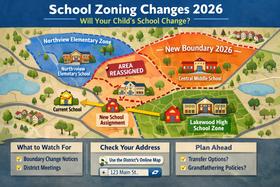
Learn more about zoning rules, how they impact schools and your child. This section offers information on the history of school zones, what they are, and how they work. Get information on who decides school boundaries and the impact those decisions have on the community.
GETTING STARTED
An overview of school designations, best practices for evaluating your options, and tips on choosing the best school for your child. Learn about Blue Ribbon, Vocational and Special Education schools. Get tips on finding the right school in a new neighborhood, city or state.
GRADING AND RANKING SCHOOLS
Explore the public school grading/ranking system, how it works and what it means. Get latest national rankings and read what critics of school grading have to say. Take a look at the nation’s top performing schools as ranked by U.S. News and Newsweek.
PUBLIC SCHOOL SAFETY
A comprehensive look at the safety of US public schools. Learn what schools are doing to combat gangs and drugs, prepare for natural disasters, and protect your children from predators. From web cameras to armed guards, see what tools public schools are employing to keep kids safe.
PUBLIC VS. PRIVATE SCHOOLS
A comparison of public and private schools, the pros and cons of each, and a look at the cost of getting a stellar education at both. Take a look at some of the most expensive schools, notable public school alumni, and learn more about “private” public schools.