Evaluating Public Schools

This section provides tools to aid in finding the best public school option for your child. Compare private and public schools, explore school zoning issues, and delve into the public school grading and ranking system. Find information on the safest schools and what they are doing right.

View the most popular articles in Evaluating Public Schools:

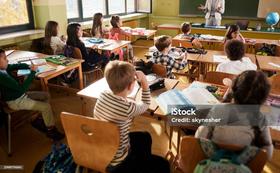
Smaller Class Sizes: Pros and Cons in 2026

Updated
|
Smaller Class Sizes: Pros and Cons in 2026
Explore the pros and cons of smaller class sizes in public schools, including 2026 research, costs, and student outcomes.

The debate over smaller class sizes remains central to education policy in 2026. Parents often assume that fewer students automatically lead to better outcomes, while districts must weigh the financial and logistical realities of reducing class size. The truth lies somewhere in between.

This updated analysis examines the benefits and trade-offs of smaller class sizes, drawing on recent research, policy developments, and real-world school practices.

What Are Smaller Class Sizes?

Class size refers to the number of students assigned to a teacher in a classroom. While definitions vary, most educators consider:

  • Small classes: 15–18 students
  • متوسط classes: 19–25 students
  • Large classes: 26+ students

Policies on class size differ widely across states. According to the National Center for Education Statistics, average class sizes in U.S. public schools have remained relatively stable, though some districts have recently prioritized reductions in early grades.

The Benefits of Smaller Class Sizes

1. More Individualized Instruction

One of the most widely cited advantages of smaller class sizes is the ability for teachers to provide personalized attention. With fewer students:

  • Teachers can adapt lessons to different learning styles
  • Students receive more direct feedback
  • Struggling learners are identified earlier

Research from the Tennessee STAR Project continues to influence policy discussions, showing long-term academic gains for students in smaller classes, especially in early grades.

2. Improved Student Engagement

Smaller classrooms tend to foster stronger participation. Students are more likely to:

  • Ask questions
  • Engage in discussions
  • Build confidence in expressing ideas

This aligns

. . .read more

Signs Your Child Is Adjusting Well to School

Updated
|
Signs Your Child Is Adjusting Well to School
Learn the key signs your child is adjusting well to the new school year, from behavior changes to academic confidence and social growth.

The start of a new academic year brings a mix of excitement and uncertainty for students and families alike. Whether your child is entering kindergarten, transitioning to middle school, or simply moving up a grade, the adjustment period can vary widely. For parents, one of the most common concerns is whether their child is settling in successfully.

Recognizing the signs your child is adjusting well to the new school year can provide reassurance and help you support continued growth. While every child adapts at their own pace, there are consistent indicators across academic, social, and emotional domains that signal a positive transition.

This guide outlines those signs, offers practical insights grounded in current research, and explains when to take a closer look if concerns arise.

What Does “Adjusting Well” Really Mean?

Adjustment is not about perfection. It reflects a child’s ability to:

  • Feel comfortable in their school environment

  • Engage with peers and teachers

  • Manage routines and expectations

  • Demonstrate gradual academic progress

According to the American Academy of Pediatrics, healthy school adjustment includes emotional security, consistent attendance, and a willingness to participate in learning activities.

In 2026, educators are placing greater emphasis on whole-child development, recognizing that social-emotional readiness is just as important as academic performance.

Key Signs Your Child Is Adjusting Well to the New School Year

1. They Talk About School Positively

One of the clearest indicators is your child’s willingness to share their daily experiences.

Signs to look for:

  • Describing classroom activities

. . .read more

Restorative Justice in Schools: What the Data Shows

Updated
|
Restorative Justice in Schools: What the Data Shows
Explore restorative justice in schools, including discipline data, outcomes, and implementation insights for educators and families.

Restorative justice in schools has gained significant traction over the past decade as districts seek alternatives to exclusionary discipline. Instead of focusing solely on punishment, restorative practices emphasize accountability, relationship-building, and repairing harm.

As concerns about suspensions, expulsions, and school climate persist, data increasingly shape how schools evaluate restorative justice implementation. This article examines what current research reveals, where outcomes are strongest, and what families and educators should understand when assessing these programs.

What Is Restorative Justice in Schools?

Restorative justice is a framework that shifts discipline from punitive responses to collaborative problem-solving. Common practices include:

  • Restorative circles
  • Peer mediation
  • Facilitated dialogue between affected parties
  • Community-building exercises

These approaches are often implemented as part of broader efforts to reduce suspensions and improve school climate.

Why Schools Are Moving Away From Traditional Discipline

Historically, zero-tolerance policies led to increased suspensions and expulsions, often with disproportionate effects on certain student groups. Research has linked exclusionary discipline to:

  • Lower academic performance
  • Higher dropout rates
  • Increased likelihood of involvement with the juvenile justice system

The U.S. Department of Education has documented these disparities and their long-term impact.

As a result, districts are reevaluating discipline strategies in favor of approaches that keep students engaged in learning environments.

What the Data Shows About Restorative Justice

1. Reductions in Suspensions and Expulsions

Multiple large-scale studies indicate that restorative justice programs can reduce exclusionary discipline.

A RAND Corporation study of Pittsburgh Public Schools found:

  • Suspension rates declined
. . .read more

School-Based Health Clinics: Funding, Billing, and Student Access

Updated
|
School-Based Health Clinics: Funding, Billing, and Student Access
Learn how school-based health clinics are funded, how billing works, and how students access care in public schools.

School-based health clinics are becoming an increasingly important part of the public education system. As schools take on a broader role in supporting student well-being, these clinics help bridge gaps in healthcare access, particularly for underserved communities. Understanding how school-based health clinics are funded, how billing works, and how students access services is essential for parents and educators navigating today’s public school landscape.

In many ways, these clinics reflect the same equity-driven goals that shape broader discussions about how public school funding works, ensuring that all students are positioned to succeed academically and physically.

What Are School-Based Health Clinics?

School-based health clinics, often referred to as SBHCs, are healthcare facilities located on or near school campuses. They provide a range of services, including:

  • Primary care, such as check-ups and immunizations
  • Mental health counseling
  • Chronic disease management, including asthma and diabetes care
  • Preventive services, including screenings and health education

These clinics are designed to reduce barriers to care, including transportation challenges, cost concerns, and scheduling conflicts.

How School-Based Health Clinics Are Funded

Funding for SBHCs is typically a blend of public and private sources. This diversified model helps sustain services but can also create variability between districts.

Federal and State Funding

Many clinics receive support through federal programs such as Medicaid and grants from agencies like the Health Resources and Services Administration (HRSA). State governments may also allocate funds, particularly in states prioritizing school health infrastructure.

According to the HRSA overview of school-based health centers,

. . .read more

NYC Schools Still Most Segregated in 2026

Updated
|
NYC Schools Still Most Segregated in 2026
NYC schools remain among the most segregated in 2026. Explore causes, data, and what families should know about equity and access.

Despite years of policy discussions and reform efforts, New York City’s public school system remains one of the most segregated in the United States in 2026. While the city is among the most diverse in the world, its schools continue to reflect stark racial and socioeconomic divides that shape educational outcomes.

For parents, educators, and policymakers, understanding why NYC schools are still highly segregated is essential to navigating school choice, advocating for equity, and evaluating future reforms.

A Persistent Pattern of Segregation

New York City’s segregation is not new, but recent data confirms that progress has been limited. According to ongoing research from the UCLA Civil Rights Project, NYC consistently ranks among the most segregated large school districts in the country, particularly for Black and Latino students.

Several patterns continue to define the system in 2026:

  • Many schools are overwhelmingly composed of a single racial or ethnic group
  • White and Asian students are disproportionately represented in selective and specialized programs
  • High-poverty schools remain concentrated in specific neighborhoods
  • Academic outcomes often correlate strongly with school demographics

The result is not just separation, but unequal access to resources, experienced teachers, and advanced coursework.

What the Latest Data Shows

Recent reports from the New York City Department of Education highlight how deeply entrenched these disparities remain.

Key Trends in 2026

Indicator

Reality in NYC Schools

Racial Isolation

Over half of Black and Latino students attend schools that are more than 80% non-white

Economic Segregation

High-poverty schools cluster in specific boroughs and

. . .read more

Recent Articles

Media Literacy as a Core Skill: How to Tell if a School Teaches It Well
Learn how to evaluate whether a public school teaches media literacy effectively, from fact-checking and source evaluation to digital citizenship and critical thinking.
Screen Time, Paper Learning, and the New Back-to-Basics Debate
Explore why some public schools are reducing screen time, bringing back paper learning, and rethinking the balance between technology and traditional instruction.
Student Data, AI Tools, and Privacy: Questions to Ask Your District
Learn how public schools use AI, protect student data, and the key privacy questions every parent should ask their school district in 2026.

Evaluating Public Schools

SCHOOL ZONING
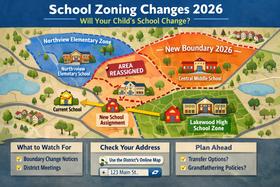
Learn more about zoning rules, how they impact schools and your child. This section offers information on the history of school zones, what they are, and how they work. Get information on who decides school boundaries and the impact those decisions have on the community.
GETTING STARTED
An overview of school designations, best practices for evaluating your options, and tips on choosing the best school for your child. Learn about Blue Ribbon, Vocational and Special Education schools. Get tips on finding the right school in a new neighborhood, city or state.
GRADING AND RANKING SCHOOLS
Explore the public school grading/ranking system, how it works and what it means. Get latest national rankings and read what critics of school grading have to say. Take a look at the nation’s top performing schools as ranked by U.S. News and Newsweek.
PUBLIC SCHOOL SAFETY
A comprehensive look at the safety of US public schools. Learn what schools are doing to combat gangs and drugs, prepare for natural disasters, and protect your children from predators. From web cameras to armed guards, see what tools public schools are employing to keep kids safe.
PUBLIC VS. PRIVATE SCHOOLS
A comparison of public and private schools, the pros and cons of each, and a look at the cost of getting a stellar education at both. Take a look at some of the most expensive schools, notable public school alumni, and learn more about “private” public schools.